


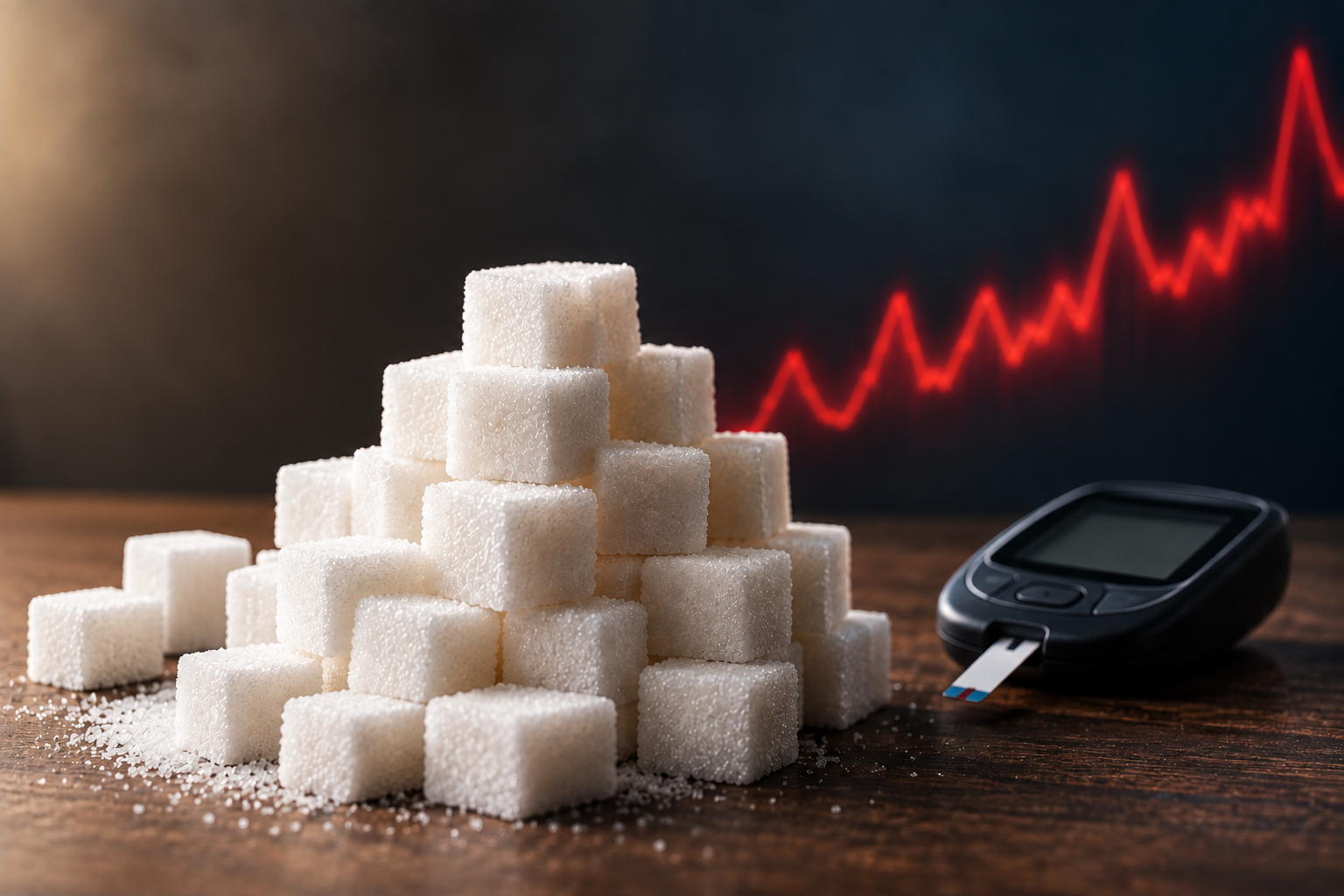
It’s very simple. Just follow the guidelines.
For example, the American Diabetes Association (www.diabetes.org), widely regarded as one of the leading authorities on diabetes, gives the following recommendations:
“A general recommendation is to consume:
- 45-60 grams of carbohydrates with each meal
- 15-20 grams of carbohydrates with each snack”
They even recommend snacks… The very people who should be advocating THE MOST for carb reduction and intermittent fasting have been dishing out the EXACT OPPOSITE advice. So, if we have 3 meals and at least 2 snacks, that comes out to 165–240 grams of carbohydrates per day. Not only is that far too much, but this constant carb snacking translates to permanently elevated blood sugar and insulin throughout the entire day (and entire life). For patients on insulin injections, this means heavy doses of insulin units. That inevitably leads to developing insulin resistance down the line, requiring additional medications just to force the cells to respond to insulin. Instead of directing people away from medications, the direction is toward hooking them on medications. Instead of health, we get chemical dependence.
A similar guideline suggests that people with diabetes should aim to get 45% of their total calories from carbohydrates, while consuming 1,500 to 1,800 calories daily. That amounts to 170 to 225 grams of carbohydrates per day.
If these are the official guidelines for people who already have diabetes – a condition fundamentally defined by blood sugar dysregulation – then what about people who don’t have diabetes?
A normal blood sugar level in the human body amounts to roughly 4-5 grams of total glucose circulating in the bloodstream. The body works around the clock to maintain this precise balance, and it is remarkably effective at producing sugar from non-carbohydrate sources, even without any carbohydrate intake at all. But who cares about the biological fact that the body is exceptionally capable of gluconeogenesis (gluco = sugar, neo = new, genesis = creation: producing new glucose from non-carbohydrate sources) – let’s just flood it with carbohydrates from every possible angle.
At its core, diabetes means a failure to clear excess sugar from the bloodstream. That triggers a domino effect of serious complications, such as cardiovascular problems, sexual dysfunction, kidney disease, hearing impairment, and deteriorating mental health. Then there is diabetic neuropathy, a form of nerve damage that causes numbness, muscle weakness, or severe pain. This condition statistically afflicts around 50% of people with diabetes (with some sources putting it at 60-70%).
That volume of meals and carbohydrates is a foolproof recipe for elevated blood sugar all day long, piling on excess body fat, and building or worsening insulin resistance until the pancreas burns out to the point where it can no longer produce enough insulin.
Insulin resistance is a condition where cells stop responding properly to the signal of insulin, which directs them to absorb and utilize glucose. This prompts the body to pump out even more insulin to “force” the cells into submission. Over time, this exhausts the body’s ability to produce insulin at all. Interestingly, up until the 1920s, a ketogenic diet was the standard medical protocol for treating diabetes, yet you hardly ever hear this acknowledged publicly anymore.
However, insulin also signals muscle cells to take up amino acids; when resistance develops, both muscle building and muscle retention take a massive hit.
The progression toward the most common form of diabetes (type 2) looks like this:
- Following the mainstream food pyramid and dietary guidelines
- Insulin resistance
- Prediabetes (a milder manifestation where blood sugar is higher than normal, but not yet high enough to meet the clinical diagnostic threshold for diabetes)
- Full-blown type 2 diabetes
General population guidelines dictate that 45–65% of daily calories should come from carbohydrates, based on a 2,000-calorie baseline for women and 2,500 calories for men. The official recommendations for diabetics aren’t much different.
If you’re taking in 1,800 calories, that comes out to 200 to 290 grams of carbohydrates per day; at 2,000 calories, that’s 225 to 325 grams.
Official recommendations, for instance, tell girls aged 14 to 18 to consume 1,800 calories, and boys in that same age bracket to consume 2,200.
A 15-year-old girl eating 250 grams of carbohydrates a day? A 15-year-old boy eating 300 grams of carbohydrates?
That is the blueprint for how to become diabetic. And once diagnosed, patients are told to stick to guidelines that prescribe those exact same carbohydrate loads. That is the blueprint for how to stay diabetic.
For many patients, diabetic neuropathy comes with agonizing pain. The standard clinical prescription for neuropathy pain? Antidepressants…

There are countless diseases and even more preventative measures. A healthy lifestyle is the single foundational measure that covers them all!
Medicine and science are steadily arriving at these unavoidable conclusions. In reality, the evidence is plain to see, thanks to the surging number of individuals transforming their health by adopting proper nutrition and training protocols. That is why an expanding body of clinical research points directly to the ketogenic diet as an effective therapeutic intervention against obesity, insulin resistance, prediabetes, type 2 diabetes, and all the associated complications.
Science, medicine, and society as a whole carry the duty of putting human health first. Today, we have more tools and opportunities to do so than ever before. That should be our core mission.
A prime example is Primarius Dr. Tashe Trpchevski from the Plodnost Hospital – a man who has brought joy to many families through IVF and advanced medical procedures. He is a fierce proponent of proper nutrition and structured exercise, leading first and foremost by personal example. In his own words: “The gym is the true fountain of health.”
View this post on Instagram
Until recently, he was taking prescription medications for diabetes and high blood pressure. One of the direct results of starting proper nutrition and exercise protocols was a reduction in his blood sugar levels (HbA1c: a standard blood test showing average blood sugar levels over the past 2-3 months) from diabetic levels down to prediabetic and normal ranges. Specifically, fasting readings that used to swing between 6.5 and 7.2 mmol/L are now, without any medication, sitting comfortably between 5.2 and 6.3 mmol/L (94 to 113 mg/dL). This is what true diabetes REVERSAL looks like.
“Working with you allowed me to throw away my blood sugar and blood pressure meds for good!”, says Dr. Tashe.

Up until just a few years ago, mainstream medical dogma insisted that type 2 diabetes was a chronic, irreversible disease. Today, the rhetoric is shifting, and the phrase diabetes reversal is appearing directly in scientific literature – simply because researchers have witnessed it happen firsthand: blood markers normalizing completely without pharmaceutical intervention.
If full-blown diabetes can be reversed, what does that say about all the smaller health issues along the way?