


The answer depends on how long you have been away from training, your diet, how much you sleep, and your overall lifestyle. Muscle mass does not disappear the moment you take a break from working out, but over time and depending on the circumstances, it can significantly decrease.
Maintaining muscle requires less training than building it. The science is clear that roughly one-third of the training volume needed for continued progress can be sufficient to maintain your current gains. For example, if you previously performed nine working sets for a given muscle group, you may be able to maintain it with just three sets, provided the intensity remains adequate.
What happens to muscle mass if you stop training completely?
For example, after just 1-2 weeks without training, you may notice a decrease in muscle size. However, this is primarily due to lower glycogen levels, reduced water content, decreased blood flow, and reduced intramuscular fluid and nutrient circulation because the stimulus for muscle growth provided by exercise is no longer present. With regular training, muscles maintain a greater volume of fluid and nutrients circulating within them, along with naturally expanded blood vessels. Exercise essentially turns muscle into an active site of construction.
Even after several months without training, it doesn’t necessarily mean you’ve lost muscle tissue. Muscle tissue doesn’t disappear that easily, especially if you’re getting enough sleep and consuming sufficient protein. However, strength is lost much more easily. The weight you were lifting on a particular exercise, may feel significantly harder to lift after a week or two without training.
Nevertheless, when you stop training, muscle fibers gradually decrease in size over time. If the break lasts longer than a few months, actual muscle tissue loss becomes increasingly likely, even with excellent nutrition and sleep.
However, some of the myonuclei (nuclei within muscle cells) acquired during training may be retained even after muscle mass decreases. This is one of the mechanisms that contributes to muscle memory – the ability to regain previously developed muscle mass faster when you resume training.
For example, if you’ve spent years building muscle and then taken several months or even years off, you’re likely to regain the lost muscle mass faster than it took you to build it in the first place.
But realistically, unless you’re dealing with a significant injury or illness, there’s no reason why you should go that long without exercising.

What happens when you habitually neglect your body?
Inadequate sleep, physical inactivity, insufficient protein intake, and a poor diet create the ideal conditions for accelerated muscle loss. A particularly detrimental combination is the frequent, excessive intake of carbohydrates, which leads to repeated spikes in insulin and blood sugar, impaired insulin sensitivity, and chronically elevated cortisol.
Prolonged metabolic dysfunction can fuel chronic inflammation. Furthermore, insulin resistance contributes to lower testosterone levels in men, while in women, it can undesirably elevate testosterone, impair fertility markers, disrupt menstrual cycles, and lead to difficulties with conception.
Chronically high cortisol accelerates muscle protein breakdown. Combined with inadequate sleep, poor nutrition, and either a lack of training or excessive training, these factors create unfavorable conditions for maintaining muscle mass. In other words, they create an environment in which muscle mass declines alongside a significant reduction in strength.
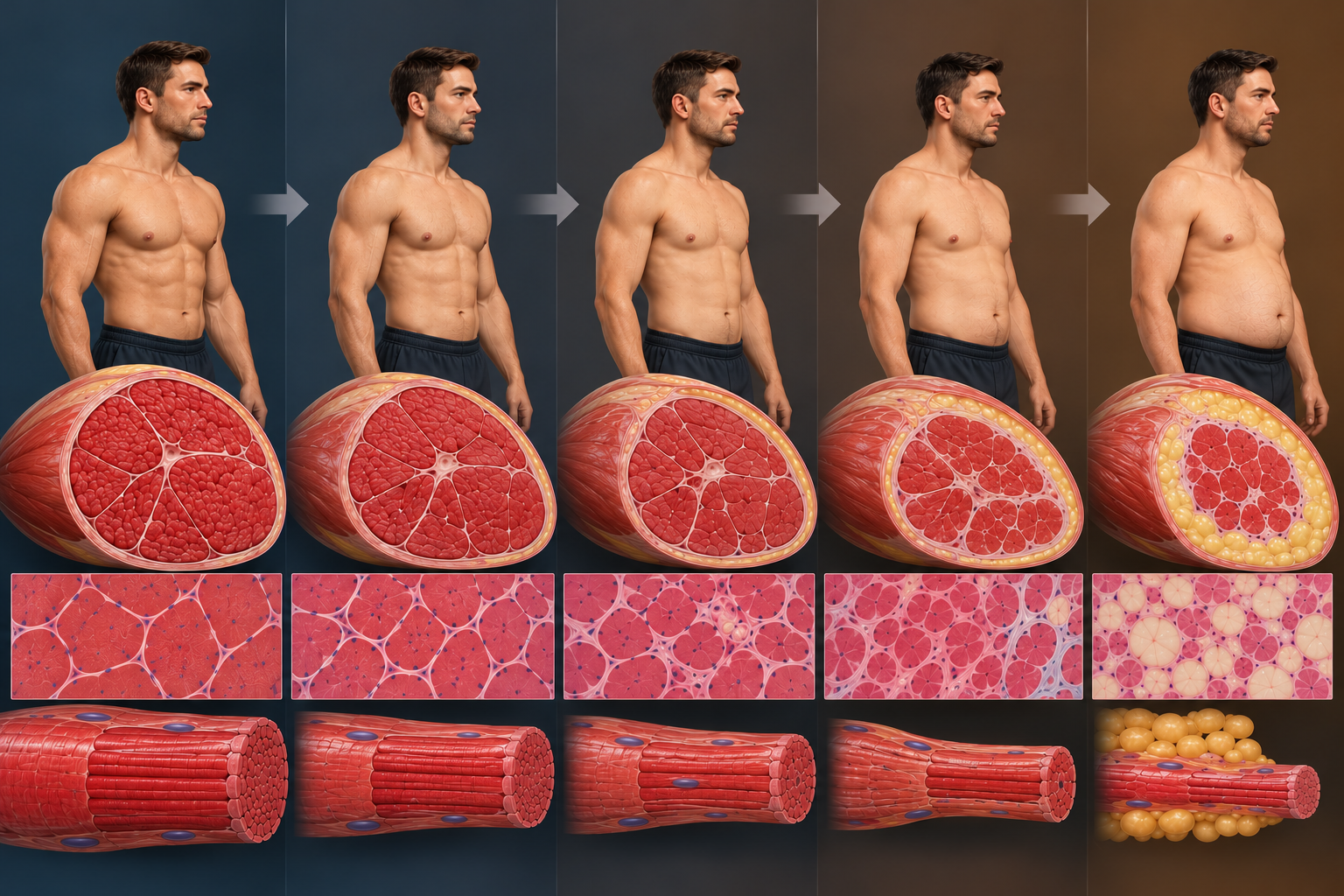
Muscles are not just for aesthetics. They are essential for metabolic health, physical strength, functional mobility, and maintaining independence in older age.
Resistance training, adequate protein intake, quality sleep, and metabolic health are fundamental to preserving muscle mass and reaping all its long-term health benefits.