


This isn’t an explanation on how to “reverse” fatty liver and then go back to the same habits that caused the fatty buildup in the first place. Yes – the liver becomes fatty because of what we consume: food, drinks, and alcohol.
For someone with healthy lifestyle habits, who follows a proper diet, exercises correctly, and doesn’t suffer from chronically elevated cortisol, the risk of developing a fatty liver is practically non-existent.
The biggest contributors to fatty liver:
- High carbohydrate intake (leading to high insulin)
- Alcohol
- Fruit sugar (fructose)
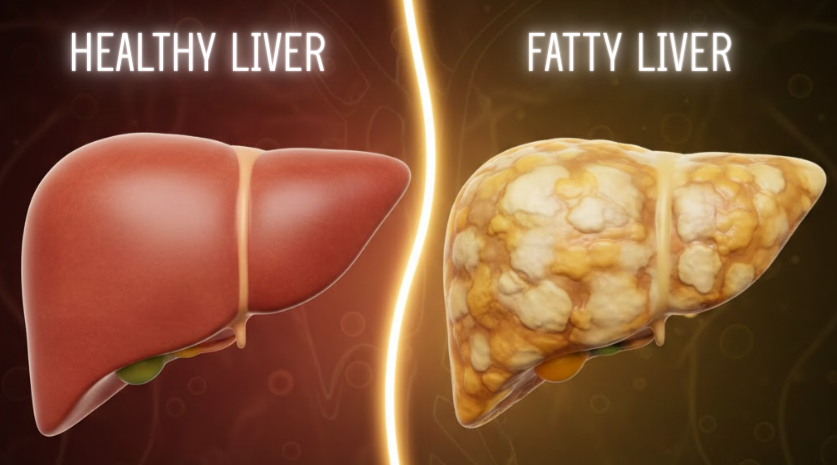
An acquaintance of mine once asked for nutritional advice. He had a bit of excess weight, particularly around the midsection. Every morning, he’d have a chia pudding with a banana and some fruit juice. “I really try to eat healthy; I eat a lot of fruit,” he’d say, boasting as if it were the pinnacle of self-care. So he happened to turn to a person (me) who would tell him the exact opposite of what he thought was right 😄. We discussed fruit, and he began explaining how healthy it is, it contained vitamins, etc. I explained the nature of sugars and how excessive fruit intake leads to fatty liver. He paused and said: “You know, you’re right. I actually do have been diagnosed with fatty liver recently.”
“I bet no one even suspected the fruit,” I said, to which he replied: “Not only that, but my doctor kept telling me to eat fruit.”
Doctors don’t learn much about nutrition. This is so true that special programs are now being implemented in the USA to integrate nutritional education into every single phase of a doctor’s medical training.
So, that doctor might not have known about the favorite hobby of fruit sugar, known as fructose – to cause fatty liver and hepatic insulin resistance!
Fruit sugar isn’t the sole culprit; perhaps there was some extra beer/wine/spirits involved, a diet overloaded with carbs… and the fact that 50% of both white and brown sugar is fructose.
With an improper diet, the liver becomes fatty. With a proper diet, it clears up.
Study (from August 2024)
Two groups of people with fatty liver were put on diets with the exact same number of calories. One group followed a high-carbohydrate, low-fat diet (what is classically considered “healthy” today), while the other group followed a low-carb, high-fat ketogenic diet. I emphasize: both groups consumed the same amount of calories. Later, the groups switched diets so that every participant experienced both ways of eating.
Key Results
- The ketogenic diet reduced the amount of liver fat by a staggering 35% in just 4 days.
- The high-carbohydrate diet led to no reduction in liver fat whatsoever.
- On the ketogenic diet, the body began burning its own fat for energy much faster.
- Improved insulin function: blood insulin levels dropped, and the liver became much more insulin-sensitive (the opposite of insulin resistance).
- Levels of triglycerides and fasting insulin both decreased.
Why did this happen?
Researchers concluded that liver fat decreased due to three main reasons:
- A reduction in the process called de novo lipogenesis, meaning the creation of new fat from non-fat sources, mainly carbohydrates.
- The body began using (burning) fat as its primary fuel source.
- An increase in the production of ketones (energy molecules that the liver produces from fat).
This is why, through the right lifestyle steps, many people on our programs have successfully reversed their fatty liver!
Since the beginning of Muskultura, I have been writing about the fact that not all calories are equal. It is dangerous to count calories without looking at their source:
Dino Nikolic
Creator and author of Muskultura
January 13th, 2026