

The keto dietary approach solves the modern issue of continuously elevated insulin and blood sugar levels. The benefits of this are innumerable.
There is yet another level beyond this, and that level delivers even more powerful benefits:
Intermittent Fasting
Until now, I have not written about intermittent fasting because I was in the process of thoroughly studying it in practice. Since November 2021, I have been fully committed to intermittent fasting, and since 2017, I have been following a low-carbohydrate diet.
You see, Muskultura is not a rehash of other rehashes from websites, scientific studies, or personal opinions.
Scientific studies are fine; there are studies that claim one thing and naturally others that claim the exact opposite. Here, we deal with practical, real-world outcomes. Reading scientific research is valuable, but we draw our conclusions from observing live outcomes, specifically the consistency of those outcomes.
Primary Characteristic of Intermittent Fasting (IF)
The primary characteristic of IF is that it further reduces the frequency of insulin and blood sugar spikes.
This drives even more effective fat burning (yielding ketones (acidic fuel molecules produced by the liver from fat breakdown)—a byproduct of fat oxidation used as energy) and a natural elevation of growth hormone, also termed somatotropin (the primary peptide hormone responsible for cellular regeneration and tissue growth). Soma = body, Trophein = nourishment, reinforcement, growth.
Viewing intermittent fasting through the lens of ketones and somatotropin provides a far clearer operational understanding than most possess.
The longer the duration without elevated insulin and blood sugar, the more growth hormone the body secretes, and the more efficiently it operates on ketones. The magnitude of the blood sugar elevation plays an equally critical role.
Fundamentally, two operational factors exist:
- Frequency of elevation: the number of daily spikes in insulin and glucose [addressed via IF]
- Magnitude of elevation: the amplitude of the insulin and glucose spike [addressed via KETO]
Consequently, proper intermittent fasting inherently involves a ketogenic or low-carbohydrate foundation.
Maximizing Benefits
Fasting indefinitely without break is unfeasible, yet fasting windows that are too brief yield minimal returns. Several operational variables must be balanced against individual objectives to extract the maximum outcome across all parameters—translating directly into peak adaptations and health.
Muscle Hypertrophy
Increasing muscular hypertrophy (the enlargement of skeletal muscle tissue) is impossible without mechanical load (resistance training) and adequate intake of proteins and fats.
Providing adequate protein and fat without mechanically stimulating muscle tissue results in zero growth. Stimulating growth without supplying sufficient substrate equally produces zero growth.
The signal for growth is amplified by growth hormone, which increases substantially through disciplined intermittent fasting.
The technical challenge lies in maximizing growth hormone secretion alongside maximal protein synthesis (the intracellular process where nitrogenous compounds are integrated into skeletal muscle tissue).
What constitutes an optimal stimulus? Excessive volume blunts the hypertrophic stimulus. Insufficient volume provides no trigger at all. Given an adequate stimulus, what precise quantities of protein and fats are required? This precise calibration determines whether one extracts maximum utility from growth hormone, training, and nutrition.
Fat Loss
Proper intermittent fasting remains the most potent tool for healthy fat reduction.
Physical exercise is not an absolute prerequisite for intermittent fasting to work. However, programmed training compounds the effect, yielding adaptations across multiple biological systems.
This protocol permits skeletal muscle preservation or development alongside adipose tissue reduction. For individuals without excess adipose tissue, adjusting caloric intake maintains stable body composition without unintended weight loss, or facilitates deliberate mass gain.
Intermittent fasting combined with carbohydrate restriction does not produce uncontrollable, automatic weight loss. (Were that true, the human species would have faced extinction hundreds of millennia ago.)

Crucially, macro requirements—proteins, lipids, and carbohydrates—differ markedly under IF compared to conventional regimens consisting of 3–4 meals alongside frequent snacks. Under IF, physiological metabolic rules shift. The endocrine response diverges radically from the 3–4 meal baseline.
These physiological shifts alter cognitive performance, baseline energy stability, emotional regulation, volition, physical stamina, systemic markers, and skin clarity (frequently resolving acne vulgaris). These internal improvements reflect outward, directly altering how one is perceived by peers.
Fasting vs. Starvation
Clarifying terminology is essential.
Intermittent fasting IS NEITHER STARVATION NOR DEPRIVATION. This distinction is critical: under structured intermittent fasting supported by proper nutritional density, physiological hunger signals subside. Maintaining the fast does not require coercive willpower. “Abstaining from food intake” is technically more accurate than “starvation.” Those who equate it to starvation misunderstand the underlying metabolic mechanics of IF, typically having never sustained it long enough to trigger these adaptations.
Even the term fasting carries colloquial connotations of ascetic deprivation, yet it serves our practical vocabulary.
Intervals
IF operates via designated feeding windows: allocating caloric intake to one or two discrete windows per day, followed by an uninterrupted non-feeding window.
Extending the non-feeding duration increases the metabolic adaptation, provided it aligns with current systemic capacity and end goals.
Common protocols include consuming two meals within an 8-hour window (16-hour fast), within a 6-hour window (18-hour fast), or more effectively within a 4-hour window (20-hour fast). These time frames—4, 6, and 8 hours—serve as baseline models rather than rigid boundaries; protocols such as 19:5 or 17:7 function effectively.
The fundamental objective is adopting these protocols systematically, ensuring long-term sustainability without reverting to past consumption habits.
Consuming a single daily meal (OMAD) or implementing occasional multi-day fasts is also viable. Multi-day fasts offer deeper biological upregulation but demand precise metabolic adaptation to ensure daily cognitive and physical functionality remain uninterrupted.
Fragmented adaptations—such as fasting only 2 days out of 7—remain suboptimal compromises. Once the systemic impact of IF on growth hormone and overall endocrine signaling is understood, adopting the protocol consistently yields superior compounding results.
Why avoid high-frequency consumption? A perceived loss of culinary enjoyment? ON THE CONTRARY.

Utilizing the formulations we have developed at Muskultura, culinary satiety exceeds previous baselines. Virtually every hyper-palatable, processed food has a metabolically sound, nutrient-dense equivalent that frequently surpasses the original in taste.
Nutrient-dense breads and desserts readily outperform commercial, ultra-processed supermarket alternatives.
This relies on two distinct mechanisms, the latter being paramount:
- Whole-food, dense ingredients provide superior flavor profiles.
- Dopaminergic and gustatory sensitivity upregulates (taste receptors become sharper) = heightened sensory satisfaction.
(When transitioning to keto, the assumption was that nothing could replace traditional confectionery spreads, an outcome accepted as an operational tradeoff. However, developing nutrient-dense formulations resolved this: satiety is achieved without compulsive cravings. Postprandial somnolence (the lethargic state commonly known as a food coma) following sweets is eliminated, replaced by sustained energy delivery. These recipes are packed with healthy lipids, bioavailable proteins, dietary fiber, and trace minerals.)
Modern consumer culture encourages consumption based strictly on VOLUME. Ubiquitous access to large quantities of hyper-palatable foods, refined carbohydrates, and snacks drives continuous, habitual grazing. Sustained culinary satisfaction does not require high volume or high frequency; high frequency and excessive volume are merely behavioral artifacts of consumer marketing.
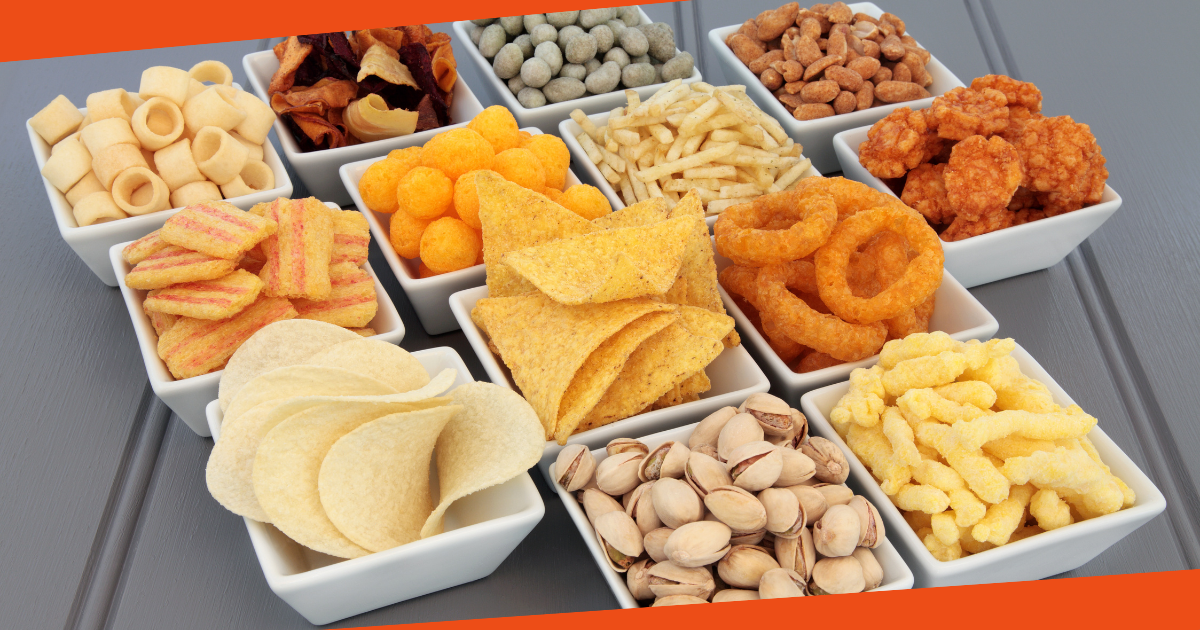
True sensory value derives from quality, not volume. A brief, high-quality sensory experience consistently outperforms days of low-grade, distracted consumption.
In the absence of nutritional and sensory density, individuals subconsciously compensate with volume.
Elevating structural quality naturally eliminates the compulsion for volume. This principle directly challenges the commercial drive toward continuous consumption, which is why these metabolic realities receive little mainstream promotion despite their physiological simplicity.
(Financially, this dietary paradigm—including dedicated recipes—operates far more economically than standard regimens. Measuring pure food-cost savings understates the impact, as the broader economic and energetic dividends compound across all areas of performance.)
IF optimizes biological efficiency, allowing the body to produce superior output with lower caloric throughput. Energy extraction becomes streamlined. When metabolic fuel is utilized with high cellular efficiency, caloric surplus is minimized, preventing unwanted fat storage. The organism operates in an active, energy-producing state rather than a sluggish, storage-oriented state—functioning precisely as biological evolution designed it to work.