

Progressive resistance training is the gradual increase of weight used during exercises. Also known as progressive overload, this method facilitates improvements in both muscle mass and strength. If you are seeking consistent growth and continuous gains, the following principles make that progress possible.
The hormonal response triggered by resistance training is the key to muscle growth—in fact, it is the primary driver. Weight training serves as the stimulus for this hormonal response, while nutrition and sleep play crucial roles in the process.
 Testosterone and Human Growth Hormone (HGH) are among the primary hormones that contribute to increased muscle mass, bodybuilding, fat burning, and strength gains in the context of resistance training.
Consequently, stimulating these two hormones is the most critical aspect of weight training. Anything that negatively impacts these hormones will hinder your progress and slow muscle development, regardless of your training routine. Conversely, anything that positively influences them will accelerate your progress, increase muscle mass, and lead to a positive body transformation. This is why weight training must be correct in regard to hormones.
Increased physical stress from resistance training boosts the hormonal response (the secretion of testosterone and HGH). This enhances the body’s adaptation to physical stress, known as physical fitness. As fitness improves, the relative physical stress from the same exercise decreases.
The body is an adaptive mechanism. The more the body adapts to resistance training, the less impact that same routine will have on it and its hormonal responses. Therefore, the main element to regulate in training is physical stress.
Increased physical stress increases hormonal response, hormonal response increases physical fitness (adaptation), fitness decreases physical stress.
There are several methods you can use to increase physical stress.
Principles of Progressive Resistance Training
Long-term Progressive Resistance Training (The Best Method)
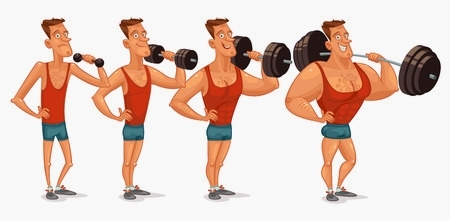 Training long-term (over several months) with the same weights, exercises, and repetitions will not lead to fast progress. Such training eventually levels off into an activity similar to aerobic exercise (cardio). This lowers the hormonal response and the stress placed on the muscles, leading to stagnation.
Muscles require continually increasing stress that exceeds previous levels. This added stress challenges them to grow consistently so they are better equipped to handle the load next time.
Muskultura‘s training programs utilize this method along with many others to achieve the fastest muscle growth naturally possible. Beyond muscle size, we also aim for greater power output. Power does not come exclusively from the muscles; it comes from the entire body as a system, including connective tissue and joints. Therefore, proper training is such that strengthens these components without damaging them.
The method of progressive resistance training through the gradual increase of weights can be applied to any program. These increases should not be drastic from one workout to the next; a weekly increase of 2–5 kg, depending on the exercise, is sufficient.
This is the fastest and most effective method for building muscle mass and strength. Additionally, progressive resistance training allows for higher intensity without increasing the total duration of your workouts.
Training to Failure with Drop Sets (Continuing with lower weights)
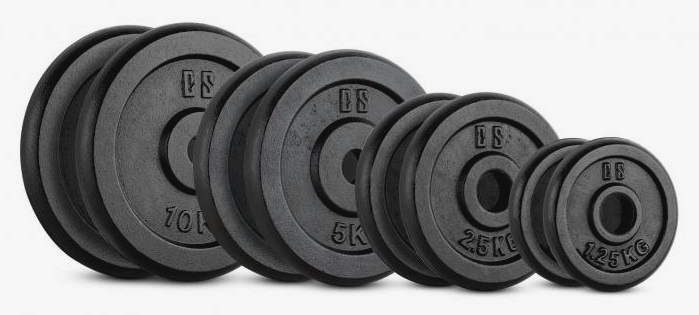 This method is very straightforward. You train with a weight that allows you to perform 5–10 repetitions at most. You perform as many reps as possible until your muscles reach failure (the point where a muscle can no longer complete a repetition with good form). Immediately after, you lower the weight and continue the same exercise until failure again. You then lower the weight once more and continue until failure.
For example, if you are performing a bench press with 80 kg and can only complete 8 reps, you would immediately strip 20 kg off the bar and perform another set. If you manage 4 reps before failing, you would then remove another 20 kg and immediately do another set to failure. To see how far you can go, proceed in this fashion and finish with an empty bar; you likely won’t exceed nine reps with the empty bar. Your muscles will be exhausted, and you might even laugh.
This method ensures maximum muscle activation and can be effectively combined with Progressive Resistance Training.
! This method should not be used if you are a beginner or if you haven’t trained in a long time. Doing so may result in sudden, extreme muscle soreness and could be such a shock to your system that it makes you ill.
Increasing the Number of Repetitions
This method has limited applications. Making drastic changes to the number of repetitions will shift the training style and, consequently, the speed of muscle growth.
To increase repetitions, you must lower the weights in order to perform. If you are experiencing slow progress in adding weight or feel you have hit a plateau, this method can help.
If you typically perform 5–10 reps, lower the weight so that you can complete 15–25 reps. The logic is to impose a different type of stress on the body, forcing it to adapt to an unexpected stimulus.
There is a significant difference between high-rep training with lighter weights and low-rep training with heavier weights. This difference involves more than just which of the two muscle types is activated.
The most notable difference is the hormonal response. Hormonal response is consistently higher when using heavier weights compared to lighter weights with high reps. It is also significantly higher when performing compound exercises that engage the entire body, rather than isolation exercises.
This method should not be used as your primary training style for long periods. It is best used temporarily for a week or two every few months to catch the body off guard, especially if you have been training with heavy weights and notice your progress slowing down. After this brief phase, return to heavier weights and fewer reps, or train with us.
The main rule is:
What is the equation of muscle growth?In order to have growth of muscle you must have “growth” of iron on the bar.