


Mediterranean diet is one of the best ways to say something without saying anything at all.
Why is this?
Because Mediterranean diet is a very broad term.
Some guidelines are definitely positive, but these kinds of general guidelines haven’t gotten us anywhere. For genuine, high-quality change, you need a lot more than just a “direction.”
Mediterranean food is based on the traditional cuisines of Greece, Italy, Spain, and other countries surrounding the Mediterranean Sea (Medi-Terranean = middle of the land). We’re talking about a region that directly includes 23 countries, plus an additional 10 countries that don’t border the Mediterranean Sea directly but are considered part of this region in a geographical, historical, cultural, and contextual sense.
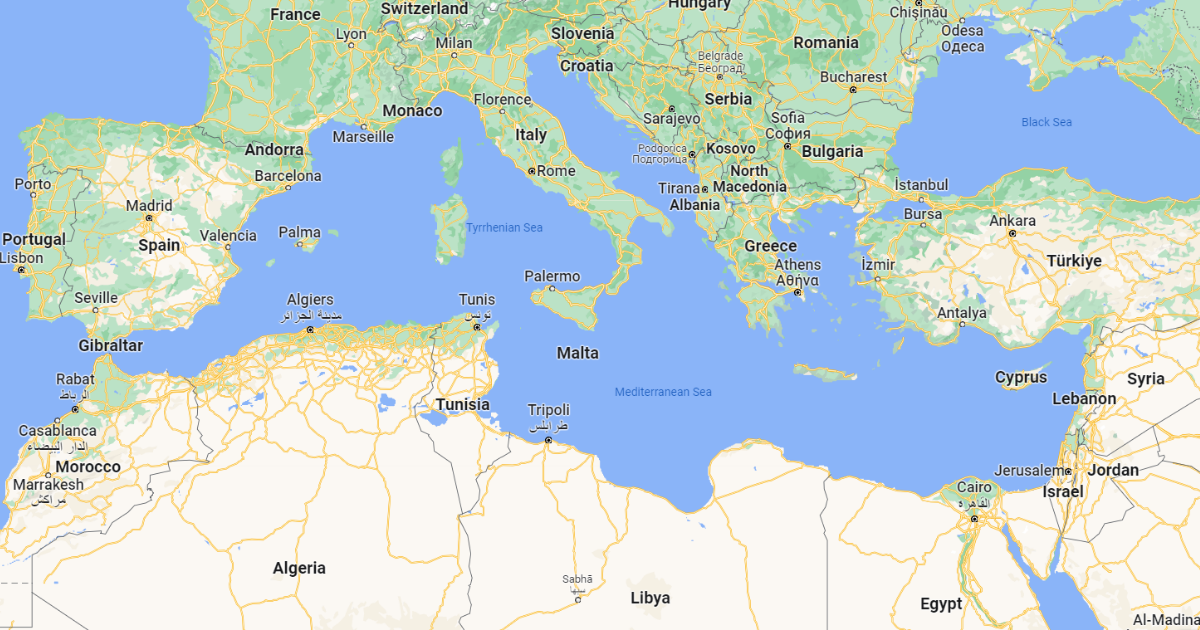
It is said to be primarily a plant-based eating plan that includes daily intake of whole grains, olive oil, fruit, vegetables, beans and other legumes, nuts, herbs, and spices. It is also said that animal protein is eaten in smaller amounts, with the preferred animal protein being fish and seafood.
There is no single standard Mediterranean diet, but rather massive variations across different cultures – Greeks eat differently from Italians, who eat differently from Turks, who eat differently from Spaniards, and so on. Even though they share some general principles, the term “Mediterranean diet” itself is so broad that it’s essentially the same as just saying “diet.” And it spans THREE CONTINENTS.
Offering the Mediterranean diet as a solution is the same as offering nothing at all.
That’s why recommendations for a Mediterranean diet SOUND good, but in practice, they are subject to interpretations with fantastic variability. How much pasta? Just a little? Wine? Oats? Stew? Potatoes, chicken breast? Salads?
However, if we want to be precise and practical in order to achieve effective change in our lives, we have to make a distinction that, by all accounts, doesn’t seem to exist in the educational system or textbooks:
“Diet” and “cuisine” are not the same thing.
“Diet” and “food” are not the same thing.
The term diet should be a far more precise and meaningful term.
Clarifying the Foundation of Nutrition and Diet
Here is our modest proposal that will shift the mindset and operating principles across multiple fields (nutrition, fitness, medicine, biology…). This is our definition – the one we operate by:
Diet (Nutrition): the type, quantity, and ratio of food that a person consumes at a specific frequency (how often) toward a specific goal.
You see, we have type, quantity, ratio, frequency, and a GOAL. In general recommendations and mainstream education, there are disastrous recommendations regarding type and quantities. There is an extremely vague, overly broad framework for ratio and frequency. In addition, certain foods are pushed toward vague goals, like “grain-based foods to reduce the risk of certain types of cancer” (which is highly debatable in and of itself).
The people who push useless advice love recommending the Mediterranean diet. That way, you won’t learn anything except that they are the experts, you are not, and you need to turn to them. 👍
Here’s one of those recommendations that leaves you completely without a compass: “Eat a moderate amount of meat.”
Just by reading Muskultura, you can learn far more than you ever would from years of working under that kind of advice. In fact, far more than what’s written in the textbooks of the people dishing out those recommendations.
Mediterranean diet is more of a cultural term than a nutritional directive.
How much meat is moderate for a 120 kg guy versus an 80 kg guy? How much is it for a 120 kg guy with zero excess fat who stands 220 cm tall, versus a 120 kg guy who is 160 cm tall? These are the specifics that make all the difference.
“Consume olive oil.” How much olive oil? And should it be with 100 grams of pasta, or rice, or without them? Because in either combination, it still falls under the Mediterranean diet. There is an enormous difference in the effects produced in the body whether you eat 100 grams of pasta, 20 grams, or zero. Three completely different outcomes, yet both are still “Mediterranean diet.”
“It’s based on grains (cereals).” How many grains (carbs) a day?
Pizza, pastries, and bread all fall in here. In moderation, right?
That’s why it provides no nutritional direction; at best, it’s merely a description of the cuisine of cultures located in the Mediterranean basin. Cuisine tells you what is eaten and how it’s cooked. A diet (if someone constructs it sensibly) tells you how much, in what ratio, how often (frequency), and why (goal). For example, changing the goal factor can completely alter all the remaining factors.
If we want to speak superficially (which is trendy today and practically feels mandatory), we’d say the Chinese eat fish and rice. And we’d assume fish and rice is fine. But 1% fish and 99% rice? Or the other way around? Or 50/50? All of these variations trigger completely different hormonal responses that go on to produce entirely different EFFECTS in both body and mind.
Ketogenic Diet Compared to Mediterranean Food
If you try to compare a ketogenic diet with Mediterranean food, you’re making a fundamental mistake because they are two entirely different categories. Keto isn’t just a diet – it is a metabolic state, and other than autophagy and intermittent fasting, it cannot be compared to anything else. On the flip side, a person can eat keto and be vegan. A person can eat keto and still fit within Mediterranean guidelines. Even on a blood-type diet, someone could still do keto. KETOSIS IS A STATE.
The Validity of a Way of Eating
If you think that we have eaten the Mediterranean way for centuries (as its evangelists claim) and that because of that this way of eating is the best, let me remind you that for hundreds of millennia we ate in a completely different way – without grain breads, pasta, and potatoes. (A millennium = a thousand years).
“Our grandparents ate kneaded bread too.” If a timespan is the criterion used to determine the validity of a diet, then biologically speaking, roughly 250,000 to 300,000 years as Homo sapiens should take priority over our recent 50, 100, or 500 years.
The problem isn’t carbs themselves. The problem is that today they DOMINATE our diet, accompanied by all kinds of harmful body disruptors, marching under the orders of murderous yet seemingly innocent recommendations.
Longevity as a Criterion for Dietary Validity
For example, Italy and Spain were among the top 10 countries with the highest life expectancy in 2023. And imagine that – it’s credited to Mediterranean food! Don’t buy into the longevity narrative pushed about certain nations. Those are superficial conclusions born out of shallow understanding and the deep ignorance of today’s average expert, as well as the non-expert. Why longevity today is a completely invalid criterion is something you’ll read about in more detail in an upcoming article.
The Best Diet Is Judged by the Outcome
If you examine the statistics, you’ll see that rates of various diseases like diabetes, cancer, and heart disease – meaning non-communicable diseases – have been skyrocketing in recent decades. Certain agencies proclaim the Mediterranean diet as the best and healthiest because it supposedly benefits heart health the most. But if you look at the health statistics of the thirty-odd countries belonging to the Mediterranean region, you’ll see the worst conditions ON RECORD! A very logical consequence when you factor in the official establishment recommendations.
For instance, 40% of Greeks have high blood pressure! Science states: “The burden of cardiovascular risk factors among Greek adults is alarming. There is considerable preventive potential and actions at health care and societal level are urgently needed.”
Diabetes Rate
Severe Obesity Rate
The Professionalism of the Recommendations
Giving advice that the Mediterranean diet is good is the exact same as saying: “You need to play sports” – without saying which sport, with how much effort, how often, whether you’ll be taking punches to the face, hitting a ball on the green, or lifting heavy weights.
Yet those exact pieces of advice come from people who only give that kind of advice: generic and useless.
“You need physical activity.”
“Eat in moderation.”
“A little bit of everything.”
“Eat a variety of foods.”
“Ring-around-the-rosy.”
“Hocus-pocus-abracadabra.”
You might think I’m joking, but there is zero difference in practical value and applicability between those statements. Telling someone to eat in moderation is functionally identical to telling them “hocus-pocus-abracadabra”!
A crucial factor for the health benefits attributed to Mediterranean cuisine is olive oil, which serves as the primary fat source. Pure, cold-pressed olive oil is so potent that it is literally medicinal. (Yet they persistently drill into us to “go moderate on fats,” so people barely drizzle a few drops just for taste).
The health benefits definitely aren’t coming from pasta, bread, and rice.
The fatal flaw of buying into useless directives like “eat Mediterranean” is that if you adopt them, you’re left holding zero specifics, thinking that some bread, potatoes, a side salad, and a little piece of meat is a healthy meal. You’ll convince yourself that “moderation, a little bit of everything” is the key to health, when in fact that philosophy is lethal. It is the primary reason behind the health catastrophe playing out in Macedonia, across the Mediterranean, and throughout the world.
Nutrition isn’t solved by chanting generic cultural slogans; it’s solved by applying a structured system made up of the exact right steps for the individual.