



Is science truly so ignorant, or does real knowledge exist but simply isn’t part of the general public’s awareness? Does science know the truth, yet the truth fails to reach the people?
The fact is that truth is far from a common commodity. Despite the unprecedented volume of spoken, written, and recorded words in human history, the truth remains insufficiently present.
This lack of presence is evident in the results.
In some areas, there are better results (more truth, more understanding) – for example, mechanical technologies like telecommunications, phones, and cars…
But in the realm of health, we see a different picture.
Birth rates show a different picture.
The quality of services does as well.
When you have a society where bridges collapse or state-of-the-art buildings leak water… in other words: when one of the most common-sense branches, sciences, and professions – engineering – begins to fail, there is very little room left to fall further.

When the most exact professions begin to make fundamental, structural errors, it is certain that others have been making them for a long time.
This is visible across multiple segments of society.
Various professions and their practitioners (the professionals) are becoming increasingly superficial in their work.
Instead of genuine attention, you get a rushed dismissal, even if your questions regarding your health issue remain unanswered.
In a store, if you ask questions, the staff gets nervous and irritable just because you asked – then they act rudely to the next person after you. It raises the question: “What if three people ask them something similar today?”
Washing machines or TVs break down the moment the warranty expires. When you call a repairman, he says: “It’s not worth fixing, just buy a new one.”

Once, cotton was cotton, and wool was wool. Today, especially with expensive brands, if you look at the label (which hardly anyone reads), you’ll see blends full of plastic (polyester).
The apps we use are designed to steal our attention, and possibly help us get something done along the way. Instead of a tool that serves us, we get software bloated with ads and unnecessary notifications.
Instead of reading one profound book, we read 50 news headlines a day and end up feeling empty and burnt out. Knowledge has become shallow (knowing a little bit about everything) instead of deep (understanding things fundamentally).
Shallow quality is eroding everything around us.
There is a solution to this.
It is time for the truth to become the main theme.
Not on the news. Not in fashion. In our heads. Only then will the truth be “the truth,” because truth must be understood. And understanding is always personal, even when it is societal.
We must understand the burden of modern times. We must understand and accept the battles we MUST fight. We don’t have to fight every battle, but some we do.
Everyday obligations and responsibilities – the survival of our loved ones, friends, relatives, and colleagues who rely on us, the installments we owe, the things we must buy, renew, or repair… somehow it all feels increasingly heavy. It gives us the feeling that we can’t spare time for something “not so urgent.” We have started dealing only with the urgent things.
That is why society lives in a state of emergency.
But that heaviness and urgency grow directly and parallel to the decrease of truth – meaning knowledge and understanding – in our lives.
Truth is like faith. It can only be experienced personally. If it evidently exists on a collective level among a group of people, it is because it was first understood on an individual level by each of them.
Truth, like faith, is not what someone else says it is. If we don’t possess it personally, it doesn’t matter who says what – we simply won’t have it.
Therefore, a person must realize and accept the real battles they have to fight. The word “battle” doesn’t always mean something unpleasant. These can be very fulfilling battles. In fact, the value of a life could be measured by the value of the battles we choose to fight.
As society progresses, it also regresses due to the diminishing presence of truth in certain segments.
From 1950 until today, the US is double the population, EU has 50% more population. But birth and fertility rates are getting worse.
We could go on and on with the stats, non-communicable diseases are on the rise, cancer rates, diabetes, etc. How is a lack of truth evident in a segment? By the deterioration of quality within it. Examples:
- Business
- Services
- Love
- Physique
- Health
- Peace
- Standard education
Don’t think that the cause is something else – like greed, a desire for money, or a lack of education. All of those may be relevant, but they are merely results of a lack of truth.
What do you gain if you have more truth in various segments? Take your health and psychophysical state as an example:
1) You learn specific body mechanisms and how they relate to appearance, energy, mood, and health.
2) You learn practically how to act to achieve better results.
3) You begin to act practically and move toward improvement.
4) You overcome obstacles during the journey.
5) You begin to feel the benefits.
Just like our success stories show.
When you achieve such results, what can we conclude? That behind everything good that happened, the foundation was one fact:
You brought more truth into your life. You found out, you learned, you opened your eyes wider.
Truth always opens eyes, and eyes don’t have to be closed to learn; in fact, to strive to learn, you must first know that you don’t know everything.
The wider the eyes are open – THE MORE ONE CAN LEARN.
Those with closed eyes believe they have NOTHING LEFT TO LEARN.
Understand that truth is the only “capital” that leads to improvement. Truth is the most valuable capital because it opens every door.
The very first field for increasing understanding (=truth) is the individual and their immediate surroundings.
Just look at that one topic and see how much untruth exists:
- What to eat? – Incorrect advice prevails.
- Supplements? – Misleading, harmful substances prevail.
- Food for children and babies? – Terrible products are marketed and sold to them.
- What causes anxiety or depression, and how are they usually “treated”?
- What is the human mind?
- …
The more untruth and difficulty there is, the more you must increase your drive toward the truth. This is one of the most important battles a person must realize they are fighting – and never forget it. If you lose this battle, the bridge collapses.
The answer to the questions above, is that science knows a great deal. Truth is present in science; it has been expressed. Science possesses enough knowledge for life to be good. Today, the knowledge to achieve a magnificent life exists.
That knowledge is NOT part of general public culture.
But in human civilization, in any society, it has never been enough just to discover the truth. People think that if the truth exists, everyone will know it. That’s part of the trick. People follow what is “publicly known” – and they use that “public knowledge” as a yardstick to judge any new information they encounter.
But in reality, the story is completely different.
Real Dialogues

“Alcohol? Well, why not, for relaxation.”
“But you don’t relax with alcohol; you just spike your cortisol and steal from the beauty of your tomorrow. It’s a false relaxation.”
“Yeah, but you can’t… you have to sit down with people…”
“I can. I sit with people and I’m still happy without it.”
“I can’t not give him ‘Choco Loco’ candies; he’s a kid.”
“By giving them to him, you’re giving him sugar + fat, high insulin, fat storage, inflammation, artificial colors and flavors, and an aggressive activation of the dopamine system.”
“Well, then what’s wrong with us? We ate that stuff too.”
“Health. Every other woman has hypothyroidism; the average man has far lower testosterone than the average man a few decades ago. Most people are overweight. Anxiety and depression are at the highest levels in history. You ‘can’t’?”
“Now you’re just going to extremes.”
“No, I’m getting out of them.” (He doesn’t realize that the extreme is in the previous answer, already “normalized.”)
“Carbohydrates? Well, you can’t live without carbs.”
“What do you mean I can’t? I’ve been on minimal carbs for 10 years. Are you aware of the fact that the body produces exactly as much sugar as it needs on its own?”
“Yeah, but you can’t…” (the “argument”)
“I’ve been doing it for 10 years.”
“Sure, but every organism is different.”
“Different in what way? Does it have a heart, a circulatory system, hormones? Do testosterone and insulin have the same functions in every organism…?”
“Well, yes, but the same thing doesn’t suit everyone.”
You see, social education has brought a large portion of the population to the sad state of being unable to recognize truth even when staring at the facts.
The problem of how the truth can reach as many people as possible is twofold:
- You must discover it
- You must communicate it understandably
The second is far harder than the first, believe me. Because the problems with the second are the problems of the recipient – and the recipients are a vast number of people.
If you take Muskultura as an example, has every reader read everything on it? Some people think we only have Instagram or Facebook.
Have they understood everything they’ve read?
Has everything they understood been put into practice?
By practicing it, have they managed to overcome the obstacles that appear along the way?
And we are saying all this DESPITE THE FACT that Muskultura is written in an extremely understandable way.
It is one thing to understand, but quite another to overcome cravings, change habits, start watching what you ingest, and start reading labels. Some people give up at the label. “Ugh, I have to read everything now?” (Those who can make it this far in a long and deep article like this are a minority, and for that, I congratulate you!)
If you don’t read, you end up ingesting absorption blockers, stomach bloaters, hormonal disruptors, allergy triggers, sensory dullers… just like most people do. They usually do this because they are unaware of the existence of these ingredients or the extent of their impact, and they don’t imagine that these things are right there in the products they buy. (Some are somewhat aware, but choose to use them anyway, thinking “it’s nothing.”)
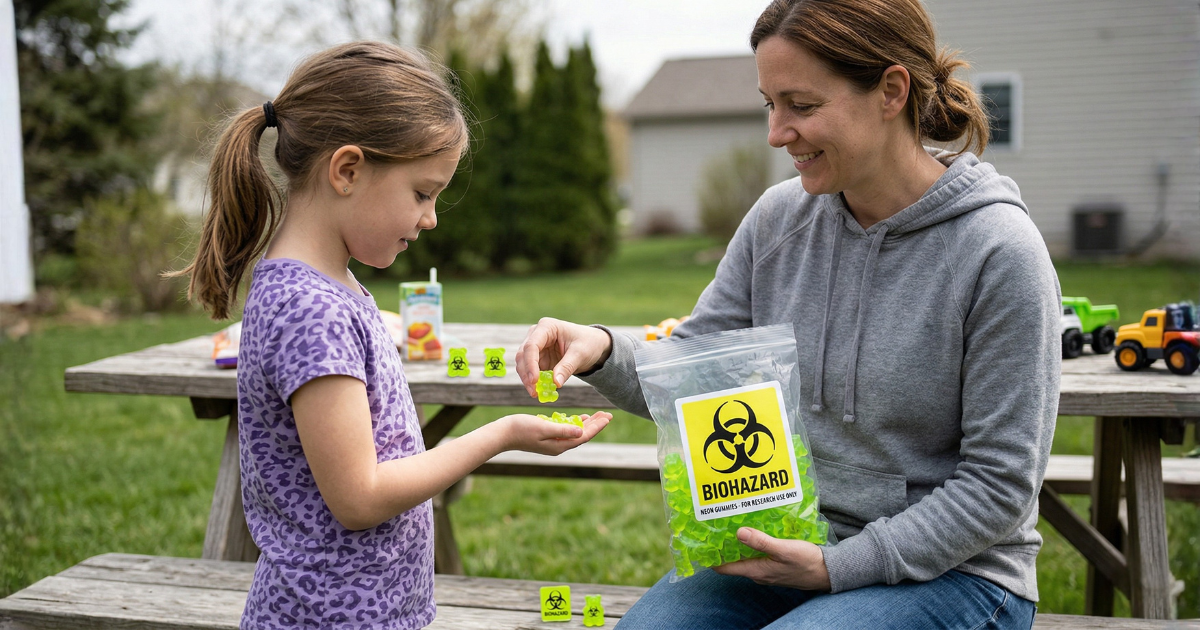
It is another thing to resist invitations to drinking parties, the smell of fresh pastry, and the like. By introducing correct steps into your lifestyle, this usually becomes much easier to the point where there’s no need to “resist” at all – but in the beginning, for some, it represents an obstacle that must be overcome.
This can be achieved with the right guidance. Still, the fact remains that when you enter the water to learn to swim, it might not be comfortable at first. But who said progress was comfortable?
With the right steps, progress is certain. In the beginning, it might not be comfortable for some, but that is a small price to pay for long-lasting and significantly increased comfort in life as a whole.
Dino Nikolic
Creator and Author of Muskultura
07.04.2026